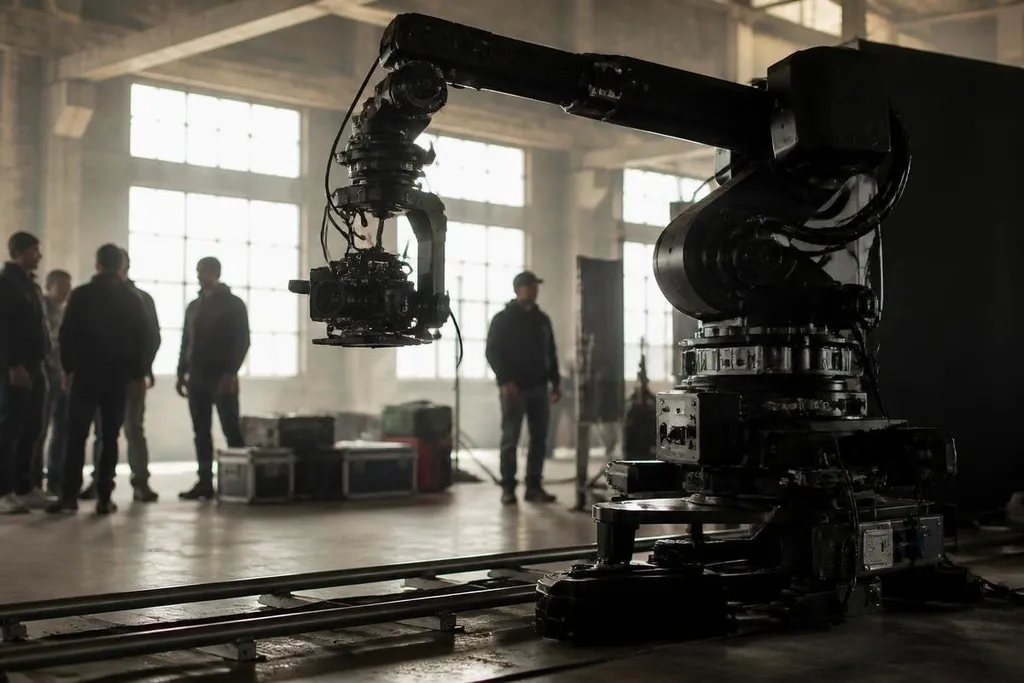
A film robot may spend months in design and appear on screen for six seconds. Without a source, shot record, or machine details, no one can tell whether that moment came from robotics, editing, or a skilled operator.
This article has no evidence pack, so it cannot responsibly rank the biggest advances in film robotics. It can set the test a real claim must pass before it earns that label.
- A shot needs records: name the robot, the production, and the date.
- A machine needs numbers: give payload, reach, speed, runtime, or setup time.
- A claim needs limits: say what the robot could not do without help.
What counts as a film robot
Film robotics covers machines that move a camera, control a prop, perform a repeatable action, or create a physical character. The useful question is what the machine did during the shot, not what the production called it.
A camera arm, motion-control rig, animatronic face, remote vehicle, and autonomous aerial system all solve different problems. A claim about one cannot be tested with the same measure as a claim about another.
For a camera rig, the record should include path length, repeat count, speed, camera weight, and the time needed to set up each take. Those details tell you whether the robot gave the crew a repeatable move or only made one carefully prepared shot.
An animatronic system needs a different record. The useful figures may include degrees of freedom, control method, battery or power needs, operating time, and the number of operators. A face that moves through a fixed sequence has a different job from one controlled live during a scene.
The evidence a major claim needs
A strong claim starts with a named production, a machine model, and a dated source. The source might be a production note, a manufacturer document, a behind-the-scenes video, or a report from the crew that used the system.
The shot itself needs close reading. Check for cuts, hidden supports, speed changes, operator input, and repeated takes. A 20-second clip may contain one continuous movement, or several short pieces joined together. Those are different results.
The same rule applies to autonomous systems. A claim of autonomy should state what the robot sensed, what software made the choice, and where a person took control. Remote control is still useful robotics, but it should not be reported as independent operation.
On a film set, a polished demo can leave out the robot’s control method, test date, and crew role. Film robotics reporting from Robot24.com can tie those details to the shot, so you can tell what the robot did during production.
Why the label can mislead
Film work rewards control. Crews can prepare the set, limit the robot's task, repeat the move, and remove unwanted motion in editing. That makes a short result look easy, even when the system needed a full team and many failed takes.
A machine can also be new to film without being new to robotics. A robot arm adapted for a camera may use hardware and control methods that have existed in factories for years.
The film advance may sit in the software, the safety setup, or the way the crew worked with the machine.
I'd rather leave a famous claim unnamed than turn an unverified demo into film history.
That caution does not make the work less useful. It gives you a better way to compare a practical camera system with an animatronic performer, because the record matches the task.
A buyer's evidence checklist
Before calling a film robotics project a major step, check these points:
- Name the machine: record the model, maker, control system, and camera or prop load.
- Describe the shot: state the movement, duration, speed, and number of continuous takes.
- Separate people from software: identify every operator, remote control input, and manual reset.
- Record the set work: include setup time, safety limits, power needs, and crew size.
- State the failure point: explain where the machine stopped, needed help, or worked only under controlled conditions.
This checklist leaves room for real progress. It also keeps a polished clip from doing more work than the evidence allows.
The next useful film robotics article needs three things before it ranks a major advance: a named production, a dated source, and machine data tied to a specific shot.